
Hair Restoration in Toronto Directory
Hair Restoration in Toronto: PRP Costs, Clinics and Realistic Results.
Compare hair restoration clinics in Toronto, from Yorkville dermatology practices to clinics in Midtown, North York and Scarborough. This guide explains 2026 prices for PRP and other non-surgical treatments, who is allowed to treat hair loss in Ontario, what an appointment involves and how to tell a careful clinic from a sales pitch.
- Clinics offering it
- 16
- Reviews from
- Data refresh
- Weekly
Top-Rated Hair Restoration providers in Toronto.
16 clinics
Civello Rosedale Med Spa
887 Yonge St, Toronto, ON M4W 2H2, Canada
(0)
Microblading
Laser Hair Removal
Skin Tightening
CoolSculpting
Hair Restoration
Beauty Bar Medical Clinic - Yorkville
25 Bellair Street 3rd floor, Toronto, ON M5R 3L3, Canada
(0)
Botox
Dysport
CoolSculpting
Hair Restoration
Laser Hair Removal
Canada MedLaser Toronto
Canada MedLaser Toronto (Queen West), 8 Gladstone Ave #1b, Toronto, ON M6J 0B3, Canada
(0)
Laser Hair Removal
Skin Tightening
CoolSculpting
Hair Restoration
Dermal Fillers
FCP Dermatology
The Concourse Building, Adelaide Street West, Toronto, ON, Canada
(0)
Laser Hair Removal
Botox
Dermal Fillers
Microneedling
Hair Restoration
OxyBeauty Cosmetic Clinic
122 Scollard St suite 201, Toronto, ON M5R 1G2, Canada
(0)
Microdermabrasion
Laser Hair Removal
Hair Restoration
Botox
Dermal Fillers
Lift Clinic Toronto
66 Portland St, Portland Street #101, Toronto, ON M5V 2M6, Canada
(0)
Dysport
Botox
Lip Fillers
Dermal Fillers
Hair Restoration

Beautytox Medical Aesthetics
121 King St W, Toronto, ON M5H 3X7, Canada
(0)
Botox
Dermal Fillers
Hair Restoration
Skin Tightening
Therapeutic Aesthetics of Toronto
545 King St W unit 315, Toronto, ON M5V 1M1, Canada
(0)
Hair Restoration
Botox
Skin Tightening
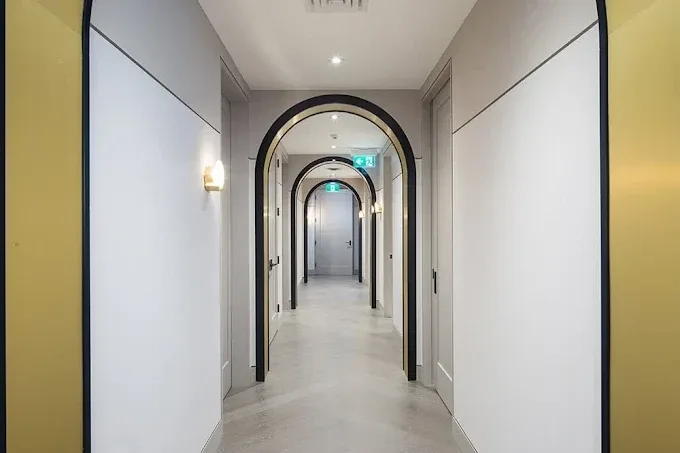
FACE Cosmetic Surgery
251 Davenport Road, Toronto, ON, Canada
(0)
Botox
Hair Restoration
Snatched TO
500 Queens Quay West unit 101, Toronto, ON M5V 3K8, Canada
(0)
Botox
Dysport
Dermal Fillers
Microneedling
Hair Restoration
Toronto Guide
Hair restoration in Toronto at a glance
- PRP for hair: roughly $400 to $900 per session at GTA clinics, usually booked as 3 to 4 sessions a month apart, then maintenance every 4 to 6 months
- Surgical transplants (FUE or FUT): commonly $5,000 to $15,000 or more depending on graft count, quoted separately from non-surgical care
- Who treats you: dermatologists, family doctors with a hair practice, and nurses working under a physician; drawing blood and injecting the scalp are medical procedures
- Downtime: none to one day for PRP and microneedling; one to two weeks of visible healing after a transplant
- Tax: cosmetic hair treatments are generally charged 13% HST in Ontario
What counts as hair restoration
The phrase covers a wide spread of treatments, and Toronto clinics use it loosely. On one end you have medication (minoxidil, finasteride and, for women, sometimes spironolactone), which a doctor prescribes and you use at home. In the middle sit in-clinic, non-surgical options: platelet rich plasma (PRP) injections, scalp microneedling, low level laser light and, more recently, exosome or growth factor products. On the far end is surgery, where follicles are moved from the back of the scalp to thinning areas.
This page focuses on the non-surgical side, which is what most med spas and dermatology clinics in the city offer. If you already have obvious bald patches with smooth, shiny skin, there may be no follicles left to wake up, and our hair transplant guide for Toronto will be more useful to you than another round of injections.
Who tends to do well
- Men and women with early to moderate androgenetic (pattern) thinning, where hair is miniaturizing but still present
- People with telogen effluvium, the diffuse shedding that often follows illness, surgery, a crash diet or childbirth, once the trigger has been dealt with
- Transplant patients who want to protect their existing native hair around the grafts
Patchy loss from alopecia areata, scarring alopecias and thinning from thyroid problems or low iron need a proper diagnosis first. A good clinic will ask for recent bloodwork or send you to your family doctor before selling you a package.
Hair restoration prices in Toronto
Prices below reflect published rates and quotes from GTA clinics in 2026. Downtown and Yorkville practices run by dermatologists or plastic surgeons sit at the top of each range; clinics in North York, Scarborough and Etobicoke are often a bit cheaper.
| Treatment | Typical Toronto price (CAD) | How it is usually sold |
|---|---|---|
| PRP scalp injections | $400 to $900 per session | Packages of 3 or 4, about $1,200 to $3,000 |
| PRP with microneedling | $500 to $1,000 per session | Often added to a PRP series |
| Exosome or growth factor scalp treatment | $1,200 to $3,000 per session | One or two sessions; evidence is still early |
| Low level laser cap or helmet | $1,000 to $3,500 to buy | Home use, 3 to 4 times a week |
| FUE hair transplant | $5,000 to $15,000+ | Priced by graft count |
Before you compare quotes, ask what kit the clinic uses to spin the blood, how much plasma ends up in the scalp and whether follow up photos are included. A single PRP session almost never shows anything, so the real cost is the full series plus a couple of maintenance visits a year. OHIP does not cover cosmetic hair loss treatment, and very few private plans do.
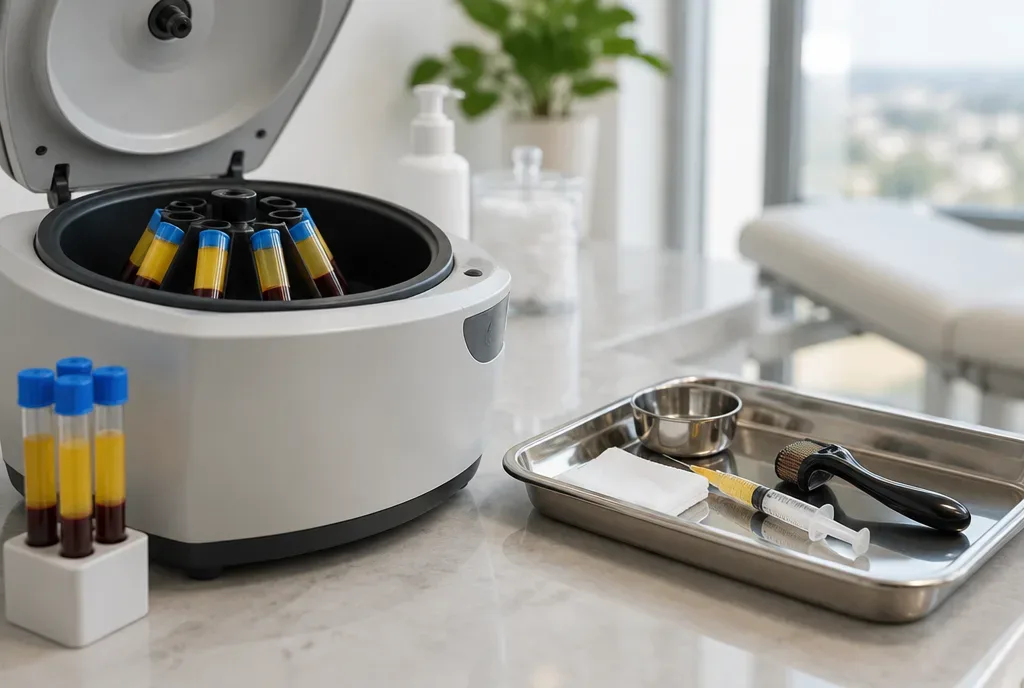
Spin protocols vary a lot between clinics, which is one reason PRP results are so inconsistent across studies.
Who is allowed to treat hair loss in Ontario
Drawing blood and injecting the scalp are not things an aesthetician can do. In Ontario, PRP for hair should be done by a physician, a nurse practitioner, or a registered nurse acting on a physician or NP order. Prescription medications such as oral minoxidil or finasteride also need a prescriber. You can look up any doctor on the CPSO public register and check a nurse through the College of Nurses of Ontario Find a Nurse tool.
Scalp microneedling and laser light are less tightly controlled, so you will see them offered in salons and trichology studios as well. That is not automatically bad, but it means you should ask who assesses your hair loss in the first place. A trichologist can be helpful for scalp care; a diagnosis of pattern loss versus an autoimmune or nutritional cause is a medical question.
Picking a hair restoration clinic in Toronto
A lot of the advertising in this category leans on dramatic before and after photos. Treat them with suspicion unless the lighting, angle and hair length are the same in both shots. More useful questions to ask at a consultation:
- Did you examine my scalp with a trichoscope or dermatoscope, and what did you see?
- Do you think my loss is pattern loss, shedding, or something that needs bloodwork first?
- What is your PRP preparation method, and how many sessions before we judge whether it is working?
- Will you take standardized photos at every visit?
- Would you recommend medication alongside this, and if not, why not?
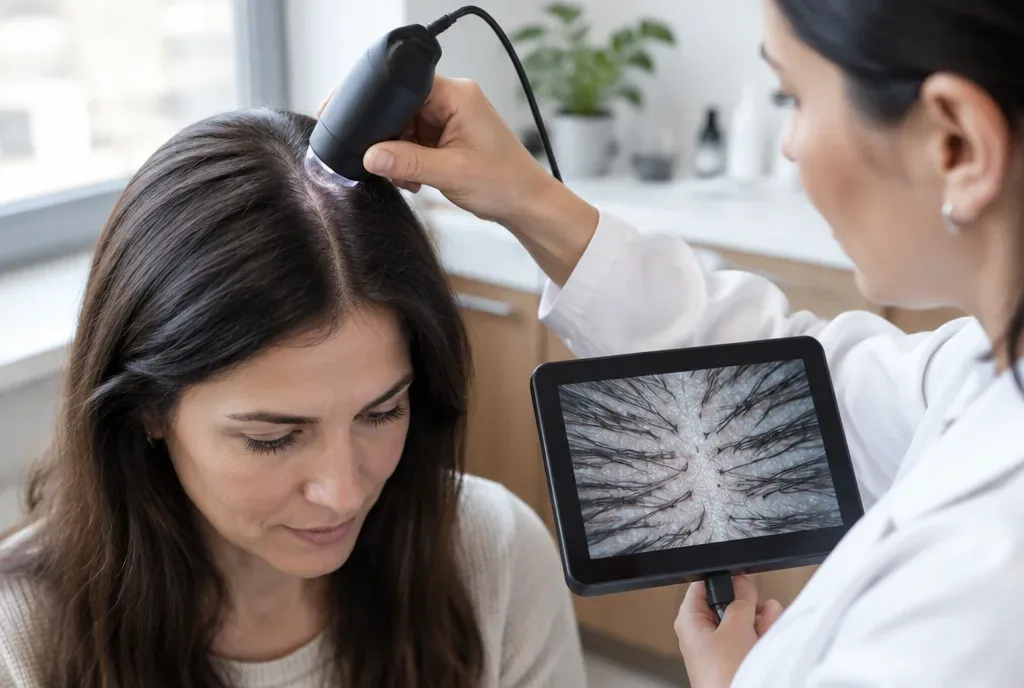
Magnified scalp images show miniaturized hairs long before thinning is obvious in a mirror.
The clinic that tells you PRP alone is unlikely to help, and suggests starting minoxidil too, is usually the more trustworthy one. Most dermatologists see PRP as an add on to medication rather than a replacement for it.
Where to look in the city
Yorkville and the Bloor Street corridor have the densest cluster of physician led hair clinics, along with several transplant surgeons. Midtown around Yonge and Eglinton and Yonge and St. Clair has a good mix of dermatology offices, and North York along Sheppard has a number of multilingual clinics with evening hours. If you live west of the city, the Burlington hair restoration page lists Halton options, and Guelph has a few clinics too. Every Toronto provider we list is on this page, or you can browse the wider Toronto med spa directory.
What a PRP hair appointment involves
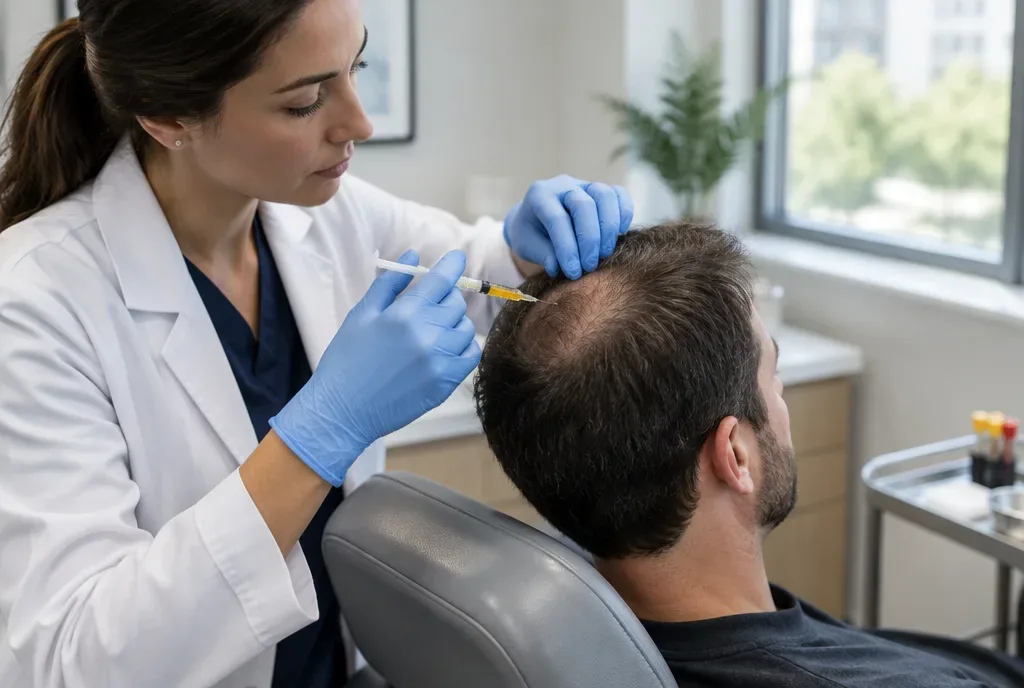
The visit takes about an hour. A nurse draws one or two tubes of blood from your arm, much like a routine blood test. The tubes go into a centrifuge for roughly ten minutes, which separates the platelet rich plasma from the red cells. Meanwhile the scalp is cleaned and often numbed with a cream, a vibration device or a nerve block.
The injections themselves are a series of small pricks along the thinning zones, usually the crown, part line and temples. Most people rate it as uncomfortable rather than painful, with the hairline being the touchiest spot. You can wash your hair that evening or the next morning. Skip hair dye, hot yoga and anti inflammatory painkillers like ibuprofen for a couple of days, since they may blunt the platelet response.
When you might see a difference
Shedding sometimes increases a little in the first month. Any improvement in density usually shows at three to six months, and the fair time to judge PRP is after the full series plus a few months. Hair growth is slow everywhere, and in Toronto winters, when hats and dry indoor heat take a toll on the scalp, people sometimes misread breakage as loss.
Honest limits, risks and alternatives
PRP has a reasonable safety record because it uses your own blood. Side effects are mostly a tender scalp, mild swelling, headache or a small bruise. The bigger problem is that results are hard to predict. Some studies show meaningful gains in hair count, others show little, and preparation methods differ so much that comparing them is tricky. Exosome products have even less research behind them, so ask exactly what product is used and what evidence the clinic is relying on.
PRP is not a good fit if you have a blood or platelet disorder, take blood thinners, have an active scalp infection or are undergoing cancer treatment. It is usually postponed during pregnancy.
If needles are not your thing, scalp care and medication remain the backbone of treatment. Our piece on scalp treatments covers the gentler options. Some people who like PRP for their hair also try it on the face; the vampire facial page for Toronto explains how that differs.
Related links
More Services in Toronto.
From our blog
Tips, guides, and treatment insights.
Explore tips, trends, and insights in wellness from our latest blog posts.



For Businesses
Help people discover your clinic.
Present your services, introduce your team, and keep your clinic information up to date.
Claim your listing