
Mole Removal in South Miami Directory
Mole Removal in South Miami: Costs, Doctors and Healing.
Thinking about mole removal in South Miami? This guide covers the dermatology and plastic surgery offices along Sunset Drive and Red Road, 2026 self pay prices for shave and excision, when insurance pays, the ABCDE warning signs, who should remove a mole in Florida, how to verify a license and what healing looks like in the South Florida heat.
- Clinics offering it
- 1
- Reviews from
- Data refresh
- Weekly

Top-Rated Mole Removal providers in South Miami.
1 clinics
South Miami Guide
Mole removal in South Miami at a glance
- Who does it: dermatologists, plastic surgeons and other physicians, plus PAs and nurse practitioners on their teams
- Self pay cost: roughly $150 to $450 for a simple shave removal, $350 to $900 for an excision with stitches
- Lab testing: most removed moles go to pathology, often $100 to $300 if billed outside insurance
- Insurance: usually covers moles that are changing, bleeding or suspicious; cosmetic removal is normally self pay
- Local note: South Miami has an unusually dense cluster of dermatology offices along Sunset Drive and Red Road
Why South Miami is a good place to get a mole looked at
If you live anywhere between the Gables and Kendall, South Miami is the obvious place to have a mole checked or removed. The city is small, but Sunset Drive, Red Road (SW 57th Avenue) and the blocks around South Miami Hospital hold an unusual number of dermatology and plastic surgery practices, and the University of Miami health system also runs specialty clinics on SW 62nd Avenue. That means shorter drives, more choice of appointment times and plenty of physicians who see skin cancer every day.
And skin cancer is the real reason to take moles seriously here. South Florida gets strong sun all year, and many people who grew up on the beaches, at Matheson Hammock or on the water have decades of exposure. Most moles are harmless. A few are not, and the only way to know for sure is a trained eye and, when in doubt, a biopsy.
Cosmetic removal versus a medical check
People ask for mole removal for two reasons. Some simply dislike a raised mole on the face, a mole that catches on a bra strap or a razor, or one that keeps getting irritated. Others notice a mole that has changed. The appointment looks similar, but the second case is medical care first and cosmetics second.
Dermatologists use the ABCDE checklist to decide what needs attention: Asymmetry, irregular Borders, uneven Color, a Diameter larger than about 6 mm (a pencil eraser), and Evolving size, shape or color. The American Academy of Dermatology's ABCDE guide has photos that make this easier to understand. If any mole matches, or if one looks different from all your others (the "ugly duckling" sign), book a skin check rather than a cosmetic removal.
What mole removal costs in South Miami
Prices depend on the method, the location on your body and who does it. South Miami fees tend to be a touch lower than Brickell and Miami Beach. Here are realistic 2026 self pay ranges:
| Service | South Miami self pay (USD) | What it involves |
|---|---|---|
| Skin check or consultation | $100 to $250 | Often billed to insurance as an office visit |
| Shave removal, one mole | $150 to $450 | Raised moles shaved flush; no stitches |
| Additional moles same visit | $75 to $200 each | Many offices discount extras |
| Punch or elliptical excision | $350 to $900 | Full thickness removal with stitches |
| Facial mole by a plastic surgeon | $600 to $1,500 | Closure planned for the smallest scar |
| Pathology | $100 to $300 | Billed separately by the lab |
Will insurance pay for mole removal? Usually yes if the doctor documents a medical reason, such as a changing mole, bleeding, itching, infection or a suspicious appearance. If the mole is purely cosmetic, expect to pay yourself, and ask for the full price including pathology before you agree. A medical exam is not taxed in Florida.
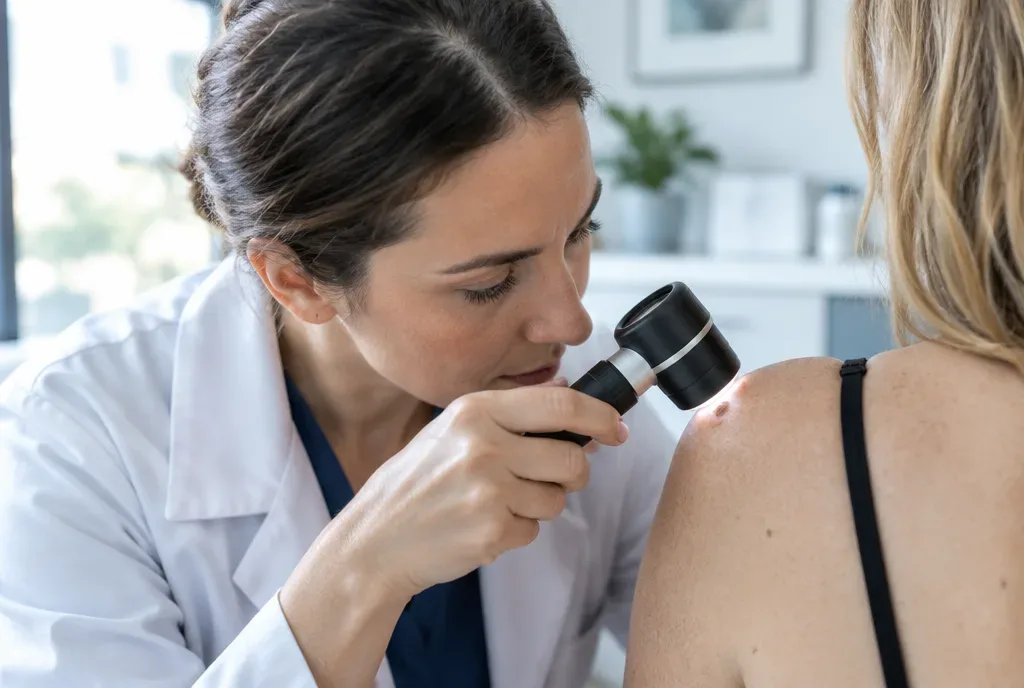
A dermatoscope magnifies the mole and lights it from within, so the doctor can see patterns invisible to the naked eye.
Who should remove a mole, and how to check them
Removing a mole means cutting skin and, in almost every case, sending the tissue to a lab. That is medical care. In Florida it belongs with physicians, and with physician assistants and nurse practitioners working within their scope alongside a physician. A board certified dermatologist is the natural first stop; a plastic surgeon is a good choice for a visible facial mole where the scar matters a lot.
Avoid anyone at a spa or salon offering to burn, freeze or "erase" moles, and skip the creams and pens sold online. They can scar, and worse, they destroy the tissue that a lab would need to rule out melanoma. You can confirm a provider's license and see any discipline on the Florida Department of Health license search.
Choosing a clinic in and around South Miami
- Ask whether every removed mole goes to pathology. The answer should be yes unless there is a clear reason.
- Ask which method they suggest and why. Shave for raised benign moles, excision for flat or suspicious ones.
- Ask about the scar. A good doctor will tell you honestly what it will look like on your skin type.
- Check how results are delivered. You want a call or portal message with the pathology report, not silence.
- Bundle a full skin check if you have not had one in a year; it adds little time to the visit.
Getting here and nearby options
Many of the practices sit within a few blocks of the South Miami Metrorail station and Sunset Place, which helps if you are coming from downtown. We list one provider in our South Miami med spa directory for this service. For more choice, our guide to mole removal in Miami covers Brickell, Aventura and the wider city, and Coral Gables and Pinecrest are both under ten minutes away by car.
The procedure and healing
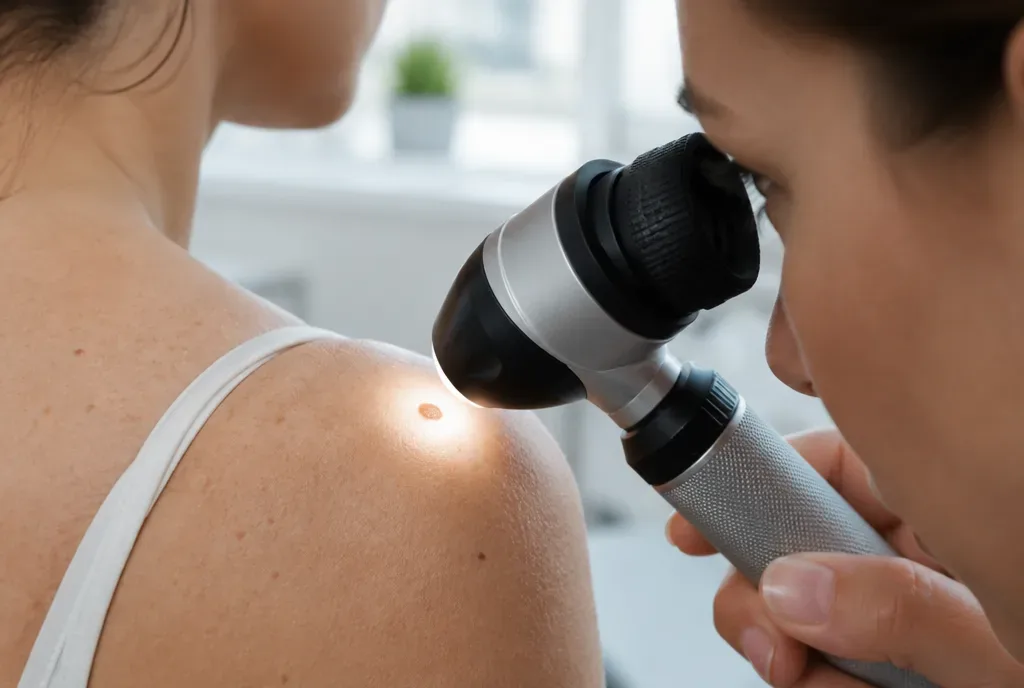
Photographing a mole before removal gives you and your doctor a reference if anything changes nearby later.
After cleaning the skin, the doctor injects a local anesthetic, which stings for a few seconds. A shave removal takes a minute or two and leaves a shallow wound, like a graze, that heals in one to two weeks. An excision takes 15 to 30 minutes; the stitches come out after about one week on the face and up to two weeks on the back or legs.
Keep the wound clean, covered and moist with petroleum jelly, which heals better than letting it dry out. Avoid swimming pools, the ocean and heavy sweating until the skin closes, which in South Miami summers takes some planning. After it heals, sunscreen on the scar for at least a year helps stop it darkening. Pathology results usually take one to two weeks.
Downsides and honest expectations
Every removal leaves some mark. Shave removals can leave a flat pale or pink spot, and a mole with deep roots can regrow a little pigment. Excisions leave a fine line scar that is longer than the mole itself, because skin needs to close in an oval shape. People with darker skin or a history of keloids have a higher risk of thick scars, especially on the chest, shoulders and upper back, so raise that before the procedure.
Infection is uncommon. Tell the doctor about blood thinners, pacemakers or allergies to local anesthetic. If the lab report shows atypical cells or melanoma, you may need a wider excision and regular follow up, which is exactly why lab testing matters.
Related treatments in South Miami
If redness and flushing are what bother you rather than a single spot, see our guide to rosacea treatment in South Miami. For overall tone and texture once a mole has healed, an anti-aging facial in South Miami is a gentle next step.
Related links
More Services in South Miami.
From our blog
Tips, guides, and treatment insights.
Explore tips, trends, and insights in wellness from our latest blog posts.


For Businesses
Help people discover your clinic.
Present your services, introduce your team, and keep your clinic information up to date.
Claim your listing