
Mole Removal in Miami Directory
Mole Removal in Miami: Costs, Methods and When to Get Checked.
Find mole removal in Miami, from dermatologists near Brickell, Coconut Grove and Kendall to plastic surgeons on Miami Beach. This guide covers 2026 prices for shave and excision removal, when insurance pays, warning signs that need a check first, who can remove moles in Florida, scarring and healing in the South Florida sun.
- Clinics offering it
- 1
- Reviews from
- Data refresh
- Weekly
Top-Rated Mole Removal providers in Miami.
1 clinics
Miami Guide
Mole removal in Miami at a glance
- Typical cosmetic price: about $150 to $500 for a simple shave removal; $500 to $1,000 or more for excision with stitches or for facial moles done by a plastic surgeon
- Lab fee: pathology on the removed tissue often adds $100 to $300 if not covered by insurance
- Insurance: usually covers removal of moles that look suspicious, are irritated or bleed; purely cosmetic removal is usually self pay
- Who removes moles: dermatologists, plastic surgeons and other physicians, plus PAs and nurse practitioners working with them
- Time: 15 to 30 minutes under local anesthetic; small wounds heal in one to three weeks
Miami gets intense sun all year, and a lot of people here spent their childhood at the beach without much sunscreen. That combination makes mole checks a normal part of life in South Florida, and dermatologists from Brickell to Kendall remove moles every day, some because they look worrying and many simply because people do not like them. This guide explains the methods, what you will pay in 2026 and how to make sure a mole is checked properly before it comes off.
Why moles get removed, and why the first step is a check
Most moles are harmless clusters of pigment cells. People remove them because they catch on a bra strap or razor, sit right where glasses rest, or simply bother them in photos. That is a perfectly good reason. The problem is that a small number of spots that look like ordinary moles are actually melanoma or another skin cancer, and nobody can be sure by eye alone.
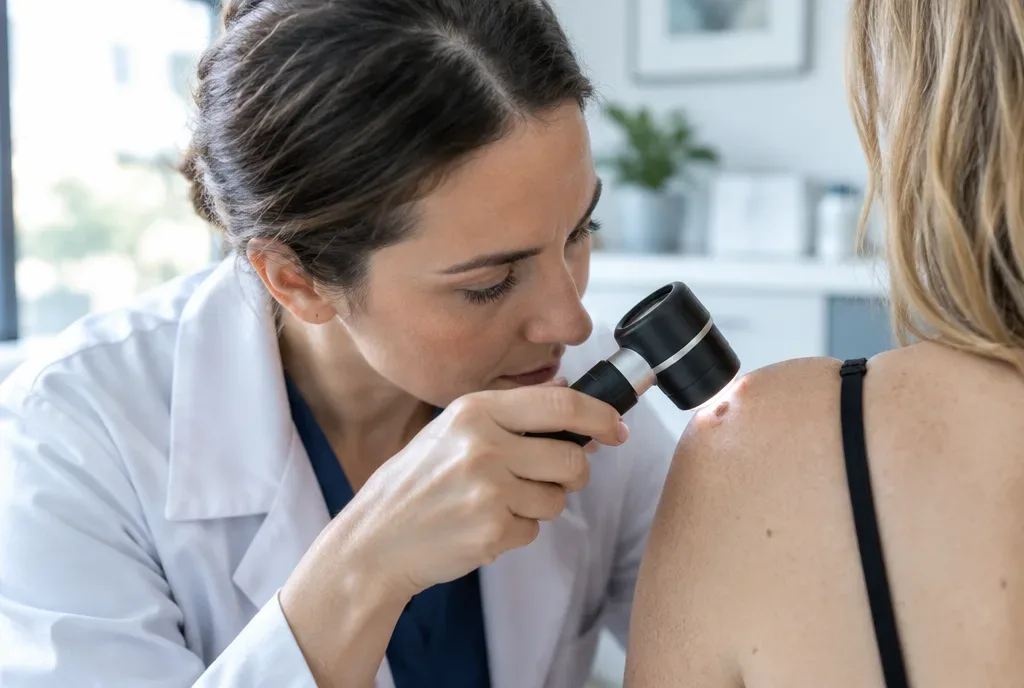
That is why mole removal belongs in a medical office, not a spa. A dermatologist will usually look at the spot with a dermatoscope, a lit magnifier that shows patterns under the surface, and decide whether it can be shaved off for cosmetic reasons or needs a deeper excision with margins. Anything removed should go to a lab. The American Academy of Dermatology's ABCDE warning signs are a good home checklist: asymmetry, uneven borders, several colors, a diameter bigger than a pencil eraser and, most important, any change over time.
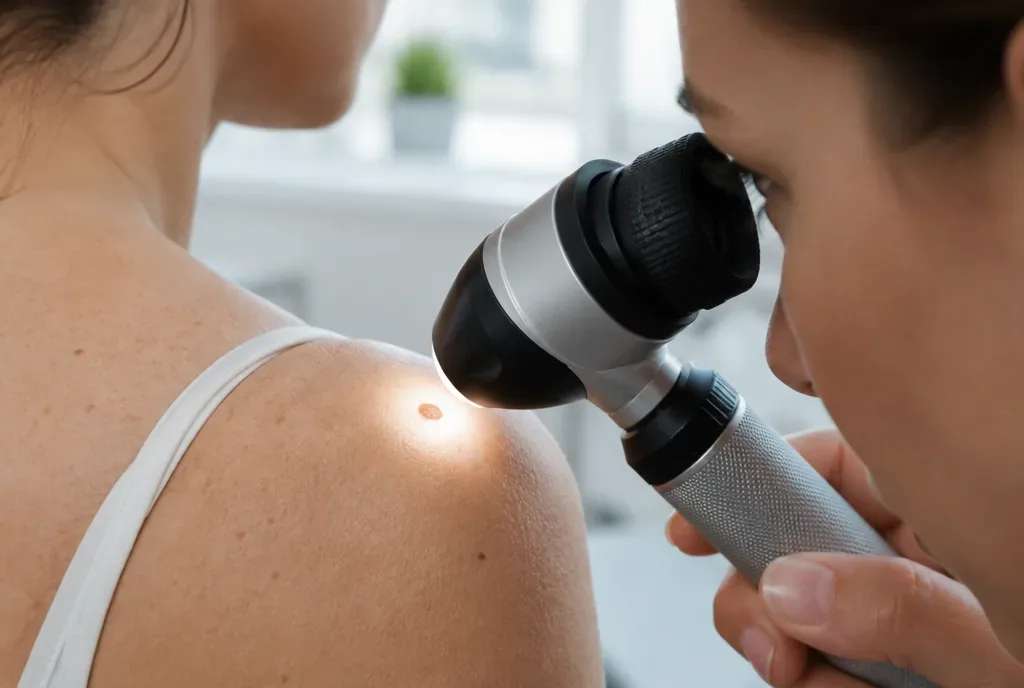
A dermatoscope lets the doctor see pigment patterns that are invisible to the naked eye, which guides how deep the removal needs to be.
Mole removal methods
- Shave removal. The doctor numbs the skin and slices the mole off flush with the surface using a small blade. No stitches, a small scab, and a flat pink mark that fades. It suits raised, benign looking moles. Some pigment cells can remain under the skin, so a little color may return.
- Punch removal. A round blade takes out a small cylinder of skin including the whole mole, closed with one or two stitches. Good for small, deeper moles.
- Surgical excision. The mole is cut out with a margin of normal skin in an oval shape and closed with stitches. This is the standard for suspicious moles and gives the lab the whole lesion. It leaves a thin linear scar a bit longer than the mole.
- Laser or radiofrequency. Sometimes used for small, flat, clearly benign spots. Because the tissue is destroyed rather than removed, nothing goes to the lab, so most dermatologists will not laser a mole that has not been fully evaluated.
Do moles grow back if cut off? A shaved mole can recur, because the base was left in place. A fully excised mole rarely returns. If a removed mole does come back, especially with darker or irregular color, go back to the doctor rather than ignoring it.
How much mole removal costs in Miami
Price depends on the method, the location on your body, who does it and whether insurance pays. Facial moles removed by a plastic surgeon with careful layered stitching cost more than a shave removal on the back at a general dermatology practice.
| Procedure | Typical Miami self pay price (USD) | Notes |
|---|---|---|
| Consultation or skin check | $100 to $250 | Often covered by insurance as an office visit |
| Shave removal, one mole | $150 to $500 | More for each additional mole, often discounted |
| Punch or simple excision with stitches | $300 to $800 | Includes local anesthetic and suture removal visit |
| Facial mole excision by a plastic surgeon | $500 to $1,500 | Fine sutures and scar focused closure |
| Pathology (lab analysis) | $100 to $300 | Billed separately by the lab |
How much should you pay? For a single benign looking mole shaved at a Miami dermatology office, a few hundred dollars is typical. Quotes of $500 to $1,000 are normal for excisions and for face and neck work by plastic surgeons. If a doctor documents that a mole is changing, itchy, bleeding or otherwise suspicious, insurance usually treats it as medically necessary, so bring your card even if you think it is cosmetic.
Who can remove moles in Florida and how to check
Cutting into skin and sending tissue for diagnosis is medical care. In Florida that means a physician such as a dermatologist or plastic surgeon, or a physician assistant or nurse practitioner working within their scope and collaboration agreements. Estheticians and spa staff should not remove moles, and neither should anyone selling creams or pens online. You can verify any Florida provider on the Florida Department of Health license search and check whether a doctor is board certified in dermatology or plastic surgery through their specialty board.
Choosing a provider in Miami
- For a suspicious or changing mole, start with a board certified dermatologist. Diagnosis comes first; the cosmetic result comes second.
- For a benign mole on the face, ask whether the doctor does many facial removals and how they close the wound. Some patients prefer a plastic surgeon for visible areas.
- Ask whether the specimen goes to a lab and how you will get the result. The answer should always be yes.
- Ask what the scar will look like. A good doctor will explain the trade off between a shave (small mark, possible regrowth) and an excision (thin line, rarely regrows).
- Get a full skin check while you are there if you have many moles or a family history of melanoma.
Neighborhoods and nearby options
There is a large cluster of dermatology and plastic surgery offices around the medical buildings on South Miami Avenue near Brickell and Coconut Grove, plus practices on Miami Beach and in Kendall. If you live south of the city, see mole removal in South Miami. The Miami med spa directory lists the clinics we cover here.
The appointment and healing

Many Miami practices photograph moles before and after removal, which is helpful if you ever need to compare later.
After a quick look and consent, the area is cleaned and numbed with a small injection, which stings for a few seconds. You will feel pressure but not pain during the removal. Shave sites get ointment and a bandage; excisions get stitches that come out after about 7 days on the face and 10 to 14 days on the body. Lab results usually arrive within one to two weeks.
Keep the wound covered and moist with petroleum jelly, and do not pick at the scab. In Miami, sun protection is the big one: a fresh scar exposed to strong sun can darken and stay that way for months. Cover it with a bandage or clothing for the first few weeks, then use a mineral sunscreen for at least six months. Skip the pool, the ocean and hot tubs until the wound has closed.
Risks, at home removal and alternatives
How risky is mole removal? In a doctor's office it is a low risk procedure. Possible problems include infection, bleeding, a scar that is wider, raised or darker than expected (more likely on the chest, back and shoulders and in people prone to keloids) and regrowth of pigment after a shave. People on blood thinners should tell the doctor but usually should not stop medication without asking.
Please do not cut, burn or freeze moles at home, or use creams sold online that claim to dissolve them. They can cause burns and scars, and they destroy the evidence a pathologist would need if the spot was cancerous. If you mostly want to even out sun spots or old scars, a laser skin rejuvenation treatment in Miami or a series of microneedling sessions can help once the mole itself has been dealt with.
Related links
More Services in Miami.
From our blog
Tips, guides, and treatment insights.
Explore tips, trends, and insights in wellness from our latest blog posts.



For Businesses
Help people discover your clinic.
Present your services, introduce your team, and keep your clinic information up to date.
Claim your listing