
Hair Transplant in New York Directory
Hair Transplants in NYC: Costs per Graft, FUE vs FUT and Surgeons.
Compare hair transplant clinics across New York City, from Upper East Side and Madison Avenue surgeons to FUE clinics in NoHo and Flatiron. This guide covers 2026 prices per graft and per session, FUE vs FUT, how to vet a surgeon in New York, recovery and growth timelines, and who is a good candidate.
- Clinics offering it
- 1
- Reviews from
- Data refresh
- Weekly
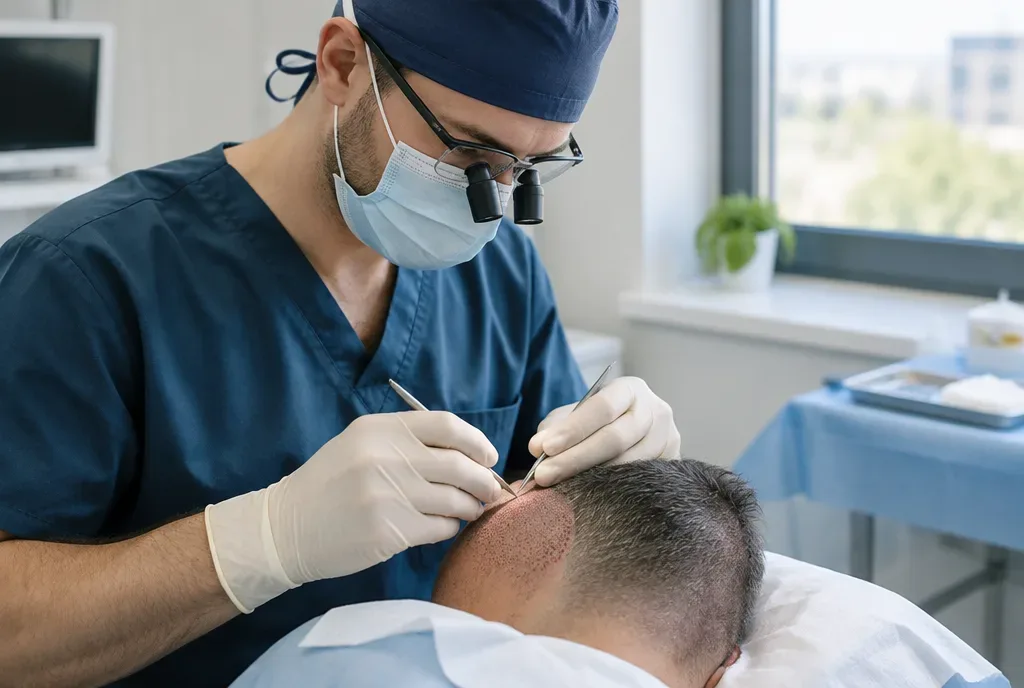
Top-Rated Hair Transplant providers in New York.
1 clinics
New York Guide
Hair transplants in NYC at a glance
- Price per graft: about $5 to $13 in New York City, depending on technique and surgeon
- Typical totals: roughly $8,000 to $15,000 for 1,500 to 3,000 grafts; larger sessions cost more
- Techniques: FUE (including robotic and DHI style implanting) and FUT strip surgery
- Recovery: back to desk work in 3 to 7 days; new growth from about month 3 or 4; final result at 12 to 18 months
- Who performs it: a licensed physician leads the surgery, with technicians helping with graft handling and placement
New York has one of the deepest benches of hair restoration surgeons in the country, from long established practices on Madison and Park Avenues to newer FUE clinics in Midtown and NoHo. That is good news for choice and bad news for clarity, because the pricing, techniques and sales pitches vary wildly. This guide walks through what a hair transplant in NYC really costs, how to vet a surgeon, and what the year after surgery looks like.
How a hair transplant works
A transplant moves follicles from the back and sides of your scalp, where hair is genetically resistant to balding, to thinning areas at the front or crown. Those moved follicles keep their resistance, which is why transplanted hair usually lasts. What a transplant cannot do is stop the hair you already have in the thinning zone from continuing to thin. That is the single most important thing to understand before you spend five figures.
FUE vs FUT
- FUE (follicular unit extraction) removes grafts one at a time with a tiny punch, leaving small dot scars you can hide with short hair. Most NYC clinics now lead with FUE, sometimes robot assisted or using implanter pens marketed as DHI.
- FUT (strip surgery) removes a thin strip of scalp that is dissected into grafts under microscopes. It leaves a linear scar, but can yield many grafts in one session and preserves donor area for later. Some top surgeons still prefer it for big cases.
Neither is automatically better. Ask a surgeon who offers both which suits your donor density, hair texture and how short you like to wear your hair.
Hair transplant cost in New York City
Most NYC practices quote per graft. Clinic articles and price pages published in 2026 put FUE in the city at roughly $5 to $13 per graft, with many full procedures in the $8,000 to $15,000 range. Big name surgeons and very large sessions can go well beyond that. Insurance does not cover cosmetic hair transplants, though most clinics offer financing.
| Session size | Typical use | Estimated cost (USD) |
|---|---|---|
| 1,000 to 1,500 grafts | Temple points, small hairline refinement | $5,000 to $12,000 |
| 2,000 to 3,000 grafts | Hairline and front third | $10,000 to $25,000 |
| 3,000 to 4,000 grafts | Front and mid scalp | $15,000 to $35,000 |
| 5,000 grafts or more | Extensive loss, often over two sessions | $25,000 to $50,000 or more |
| Beard or eyebrow transplant | Smaller graft counts, detailed work | $4,000 to $12,000 |
How much does a 5,000 graft transplant cost in the USA? At NYC per graft rates, expect $25,000 or more, and be wary of anyone promising 5,000 grafts in a single day without a careful look at your donor area. How much do 3,000 grafts cost? Usually somewhere around $15,000 to $30,000 in Manhattan. One NYC tax note: hair restoration performed by a licensed physician is not subject to the city's local sales tax on personal services, according to the New York State tax bulletin on NYC personal services.
What about going abroad?
Plenty of New Yorkers price out Istanbul packages that bundle surgery, hotel and transfers for a fraction of Manhattan prices. Some clinics there are excellent; others run high volume operations where technicians do most of the surgery. If you go that route, verify who actually performs each step, and budget for follow up care back home if something goes wrong.
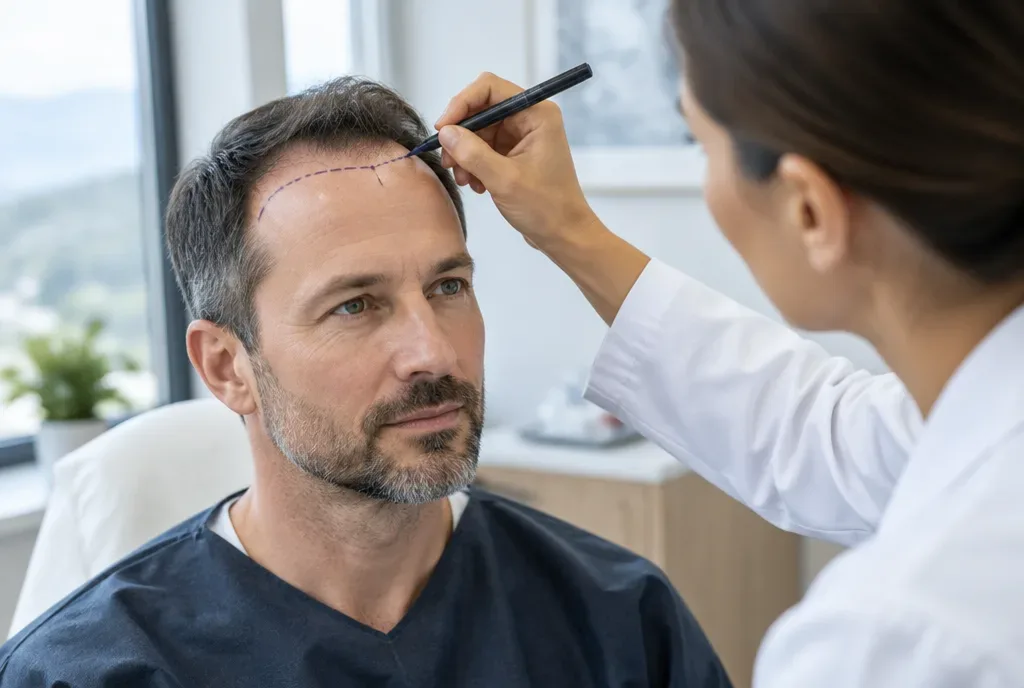
Hairline design is where taste matters most; a slightly higher, irregular line ages far better than a low, straight one.
Who can perform a hair transplant in New York
A hair transplant is surgery, so a licensed physician must lead it, and that physician should be the one who designs your hairline and makes the recipient sites. Technicians commonly help with graft extraction, sorting and placement, which is normal, but you should know exactly which parts the doctor does personally. Check the surgeon on the NYSED Office of the Professions verification search, and see the American Academy of Dermatology hair loss pages for background on causes and medical treatment.
How to choose a hair transplant surgeon in NYC
- Ask how many procedures the surgeon personally performs each month and what share of each procedure they do themselves.
- Look at many before and after photos at 12 months or later, ideally with hair wet or combed back, from patients with your hair type.
- Expect a real diagnosis. A good consultation includes a scalp exam, donor density check and a long term plan rather than a graft count and a price alone.
- Ask what they recommend to protect your existing hair, such as finasteride, minoxidil or PRP. Our NYC hair restoration guide covers those non surgical options.
- Be cautious of pressure tactics, "limited time" per graft discounts and anyone who says you will never need anything else.
Where clinics are in the city
Many established surgeons practice on the Upper East Side and along Madison Avenue in Midtown. Newer FUE focused clinics have opened in NoHo, Flatiron and the Financial District, and some Long Island and Westchester practices draw Manhattan patients too. Start with our New York City clinic directory, and if you live in Brooklyn, browse the Brooklyn listings; several Midtown surgeons are a 20 to 30 minute subway ride away.
Surgery day and the year after
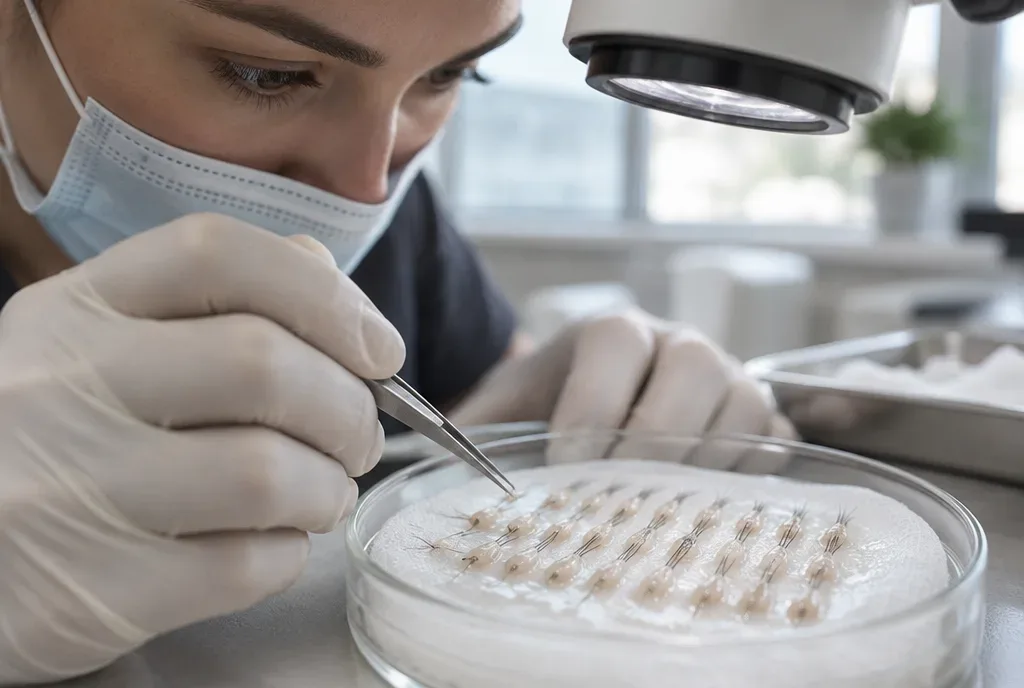
Grafts are kept cool and moist while they are out of the body; this careful handling is a big part of how well they survive.
Most procedures take 6 to 10 hours under local anesthesia, with breaks for lunch and a movie. You go home the same day with a wrapped donor area and tiny scabs in the recipient zone. Plan for swelling across the forehead for a few days. Many people take a week off work or work from home; a baseball cap is fine after a few days, which helps on the subway.
The timeline catches people off guard. Transplanted hairs usually shed between weeks 2 and 8 (shock loss), and the area can look worse before it looks better. New growth starts around month 3 or 4, looks meaningful by month 6 to 8, and matures by 12 to 18 months. Avoid heavy workouts for about two weeks, skip swimming for a couple of weeks and keep the scalp out of direct sun. Summer at Rockaway with a fresh transplant is a bad idea.
Risks, limits and who is a good candidate
Possible complications include infection, prolonged numbness, cysts, visible scarring, an unnatural hairline and poor graft growth. Over harvesting can leave the donor area thin for life. What is the best age for a hair transplant? There is no fixed number, but many surgeons are cautious under about 25, because the final pattern of loss is not yet clear. What happens 10 years after a hair transplant? Transplanted hair usually stays, while untreated native hair may keep thinning, which is why ongoing medical treatment matters; our piece on scalp treatments for thicker hair covers the supporting care. People with diffuse thinning, limited donor hair, certain scarring alopecias or unrealistic expectations are often better served by medical treatment first. Stem cell treatments for hair loss are still experimental; treat big promises with caution.
Related links
More Services in New York.
From our blog
Tips, guides, and treatment insights.
Explore tips, trends, and insights in wellness from our latest blog posts.




For Businesses
Help people discover your clinic.
Present your services, introduce your team, and keep your clinic information up to date.
Claim your listing