
Dubai has established itself as a solid and increasingly popular destination for cosmetic surgery. It offers high standards, internationally accredited hospitals and clinics, strict regulation ensuring surgeons are board-certified, and a strong pool of skilled practitioners. That combination attracts both UAE residents and medical tourists seeking high-quality care delivered in a luxury setting.
Prices vary depending on the procedure, but overall, patients access advanced surgical and non-surgical options that compare well against major destinations like the US, UK, South Korea, and Turkey. It is not the cheapest option available — but for many, the safety framework, training standards, and infrastructure make it a worthwhile investment.
Why Dubai Is Becoming a Global Cosmetic Surgery Hub
Over the past decade, Dubai has invested seriously in building its healthcare infrastructure. The Dubai Health Authority (DHA) enforces strict licensing, ensures facilities meet defined standards, and verifies practitioner credentials. Many hospitals hold Joint Commission International (JCI) accreditation — a globally recognized benchmark for healthcare quality that international patients trust.
Unlike destinations with looser medical tourism oversight, Dubai requires surgeons to be properly licensed and, in most cases, board-certified. Many cosmetic surgeons working here trained in:
- •The UK (FRCS, GMC pathways)
- •Europe (EBOPRAS certification)
- •The United States (American Board certification)
- •South Korea (advanced aesthetic specialization)
This creates a hybrid ecosystem — Western medical standards combined with a high-end patient experience.
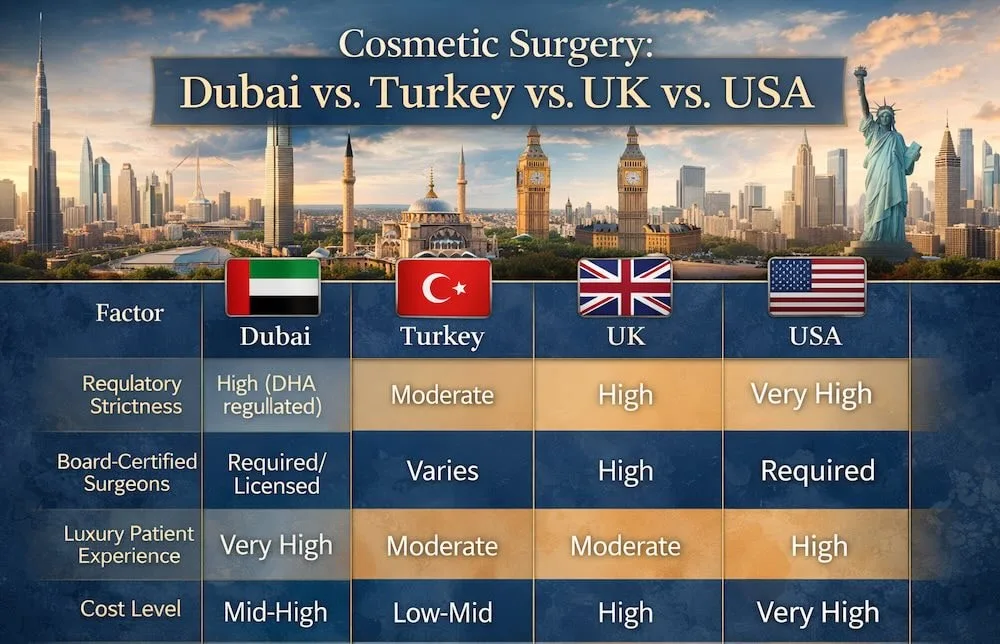
How Dubai Compares Globally
| Factor | Dubai | Turkey | UK | USA |
|---|---|---|---|---|
| Regulation Strictness | High (DHA) | Moderate | High | Very High |
| Board-Certified Surgeons | Required / Licensed | Varies | Required | Required |
| Luxury Patient Experience | Very High | Moderate | Moderate | High |
| Cost Level | Mid-High | Low-Mid | High | Very High |
| Medical Tourism Infrastructure | Advanced | Advanced | Limited | Limited |
Most Popular Cosmetic Procedures in Dubai
- •Breast augmentation
- •Rhinoplasty (nose reshaping)
- •Liposuction
- •Tummy tuck (abdominoplasty)
- •Facelift surgery
- •Eyelid surgery (blepharoplasty)
- •Botox injections
- •Dermal fillers
- •Laser skin resurfacing
- •Thread lifts
- •PRP therapy
Because Dubai attracts a genuinely international population, surgeons are experienced with diverse facial and body anatomies. That is an under-discussed advantage — not every city has that level of cross-demographic exposure.
Cost of Cosmetic Surgery in Dubai
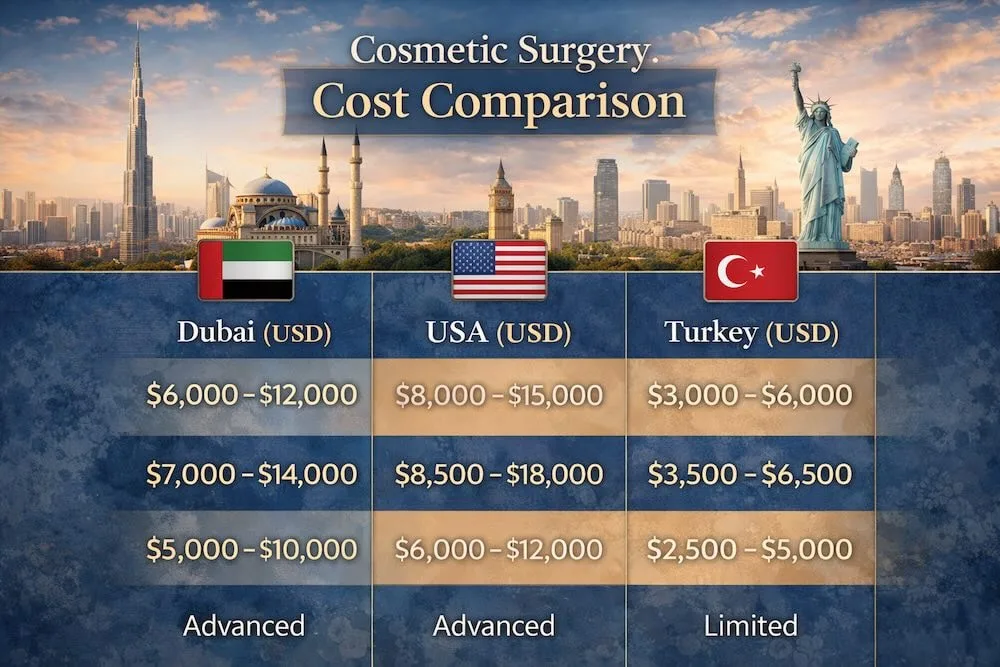
Dubai is not a budget destination for cosmetic surgery — but it is not at US pricing extremes either.
| Procedure | Dubai (USD) | USA (USD) | Turkey (USD) |
|---|---|---|---|
| Rhinoplasty | $6,000 – $12,000 | $8,000 – $15,000 | $3,000 – $6,000 |
| Breast Augmentation | $7,000 – $14,000 | $8,500 – $18,000 | $3,500 – $6,500 |
| Liposuction | $5,000 – $10,000 | $6,000 – $12,000 | $2,500 – $5,000 |
Patients often justify the difference based on an English-speaking environment, luxury recovery facilities, direct flight accessibility, and high-end hospitality infrastructure. That said, cost alone should never drive a medical decision — lower prices sometimes mean higher revision risk later, and that is a hidden expense many people do not calculate upfront.
Is Cosmetic Surgery in Dubai Safe?
Safety depends on three variables: surgeon qualifications, facility accreditation, and post-operative care standards. Dubai performs well in the first two. Surgeons must be licensed through the DHA or Ministry of Health. Clinics are inspected. Operating theatres must meet defined criteria.
Where outcomes vary — and this is true globally — is in surgeon skill and specialization depth. Board-certified does not automatically mean best for your specific procedure. A surgeon specializing in body contouring may not be the strongest rhinoplasty expert. Always verify:
- •Board certification origin.
- •Years of specialization in that specific procedure.
- •Before-and-after portfolio.
- •Hospital privileges.
When those boxes are checked, safety standards are comparable to other developed nations.
Risks and Disadvantages: What Often Goes Unsaid
1. Cost Can Escalate Quickly
Quoted prices sometimes exclude anesthesia fees, operating theatre charges, compression garments, post-operative medications, and revision policies. In premium clinics, final costs can run 15–30% above initial estimates. Always request a fully itemized quote — if a clinic avoids transparent breakdowns, that is a red flag.
2. Heavy Marketing Presence
Dubai has a strong aesthetic culture. Surgeons often maintain visible social media profiles. That can be helpful — real patient cases are visible — but it also blurs the line between marketing and medicine. A surgeon's follower count is not a credential, and before-and-after photos can be influenced by lighting, angles, and editing. Request in-person portfolio reviews.
3. Follow-Up Challenges for International Patients
If you return home shortly after surgery and develop complications, coordination becomes more complex. This does not make Dubai unsafe — it simply means medical tourism requires careful logistical planning.
How to Choose the Right Cosmetic Surgeon in Dubai
Choosing the right surgeon is far more important than choosing the right city.
- 1Verify board certification origin. Where did they complete surgical training? Do they hold UK, European, or US board certifications? Are they DHA-licensed? If credentials seem vague, investigate further.
- 2Confirm specialization depth. Face surgery and body contouring require completely different skill sets. Revision rhinoplasty is far more complex than primary rhinoplasty. Ask directly: how many of these exact procedures do you perform annually?
- 3Check hospital privileges. Reputable surgeons operate in licensed hospitals, not only small in-clinic operating rooms. Hospital privileges indicate peer-reviewed trust.
- 4Ask about complication management. What happens if revision is needed? Is there a revision fee? What if complications develop after you fly home? How a clinic answers these questions tells you more than their website.
Dubai vs Turkey vs South Korea: A Deeper Comparison
| Factor | Dubai | Turkey | South Korea |
|---|---|---|---|
| Regulatory Oversight | High (DHA) | Moderate | High |
| Average Cost | Mid-High | Low | Mid |
| Facial Surgery Innovation | Moderate | Moderate | Very High |
| Luxury Recovery Environment | Very High | Moderate | High |
| Language Accessibility | Excellent | Good | Moderate |
| Medical Tourism Infrastructure | Highly Organized | Highly Organized | Organized |
Turkey dominates in cost efficiency, though regulatory consistency between clinics varies. South Korea leads in facial cosmetic innovation — particularly rhinoplasty and jaw surgery — though language barriers can affect consultation clarity for some patients. Dubai offers balance: high regulation, strong English communication, luxury care, and a well-organized medical tourism setup. It may not be the cheapest, but for many, predictability and comfort justify the cost.
Medical Tourism Logistics
Dubai offers visa-on-arrival or streamlined tourist visa processes for many nationalities, simplifying pre-surgery consultation visits. Recommended recovery stays vary by procedure:
- •Minor non-surgical procedures: 2–3 days.
- •Rhinoplasty: 10–14 days.
- •Breast augmentation: 7–10 days.
- •Tummy tuck: 14–21 days.
Traveling too soon after major surgery increases the risk of deep vein thrombosis, swelling complications, and delayed wound healing. Surgeons typically provide flight clearance documentation before departure.
Pros and Cons: A Clear Summary
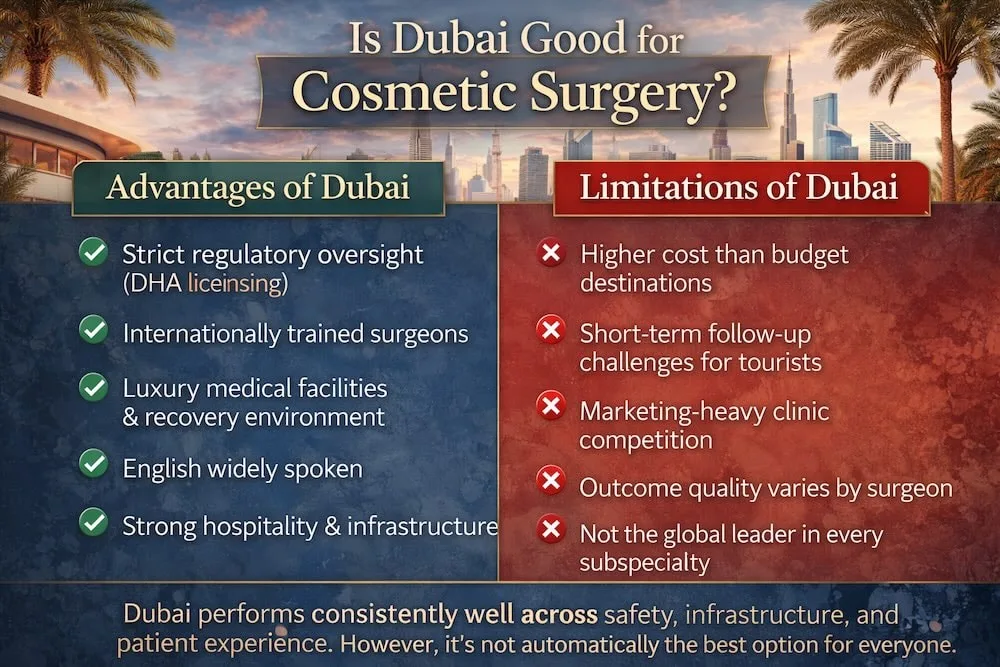
- •Strict regulatory oversight via DHA licensing.
- •Internationally trained surgeons.
- •Luxury medical facilities and recovery environment.
- •English widely spoken at all levels.
- •Strong hospitality and travel infrastructure.
- •Higher cost than budget destinations.
- •Follow-up challenges for international patients.
- •Marketing-heavy clinic competition.
- •Outcome quality still varies by individual surgeon.
- •Not the global leader in every subspecialty.
Who Should Consider Dubai — and Who Might Not
Dubai tends to be a strong fit for patients seeking regulatory assurance and structured medical governance, those prioritizing privacy and discretion, English-speaking international patients where communication clarity matters, and mid-to-high budget patients who want a quality facility and experienced surgeon without paying US-level pricing.
It may not be ideal if you are strictly cost-driven, need extended long-term in-person follow-up, are seeking highly specialized facial contouring innovations where South Korea leads, or simply prefer treatment within your home country's healthcare system.
Final Verdict
Dubai is not a cosmetic surgery trend — it is a structured medical ecosystem with global ambitions. It is not the cheapest. It is not unsafe. And it is not universally superior. It is competitive, well-regulated, and internationally connected. For many patients, it strikes a genuine balance between safety and premium experience.
But the city itself does not perform surgery. Surgeons do. And that distinction matters more than any location's brand.
Frequently Asked Questions
Yes, cosmetic surgery in Dubai is generally considered safe due to strict oversight by the Dubai Health Authority, mandatory licensing, and internationally accredited hospitals. However, patient outcomes depend significantly on surgeon expertise and procedure selection.
Dubai offers stronger regulatory consistency and luxury patient care, while Turkey typically offers lower costs. The better choice depends on budget, risk tolerance, and follow-up planning.
Most licensed cosmetic surgeons in Dubai have international board certifications and need approval from the regulatory bodies there. That said, patients should always double-check the individual surgeon's credentials themselves.
Dubai is mid- to high-priced compared to global destinations. It is generally more expensive than Turkey but often less expensive than the United States or the United Kingdom.